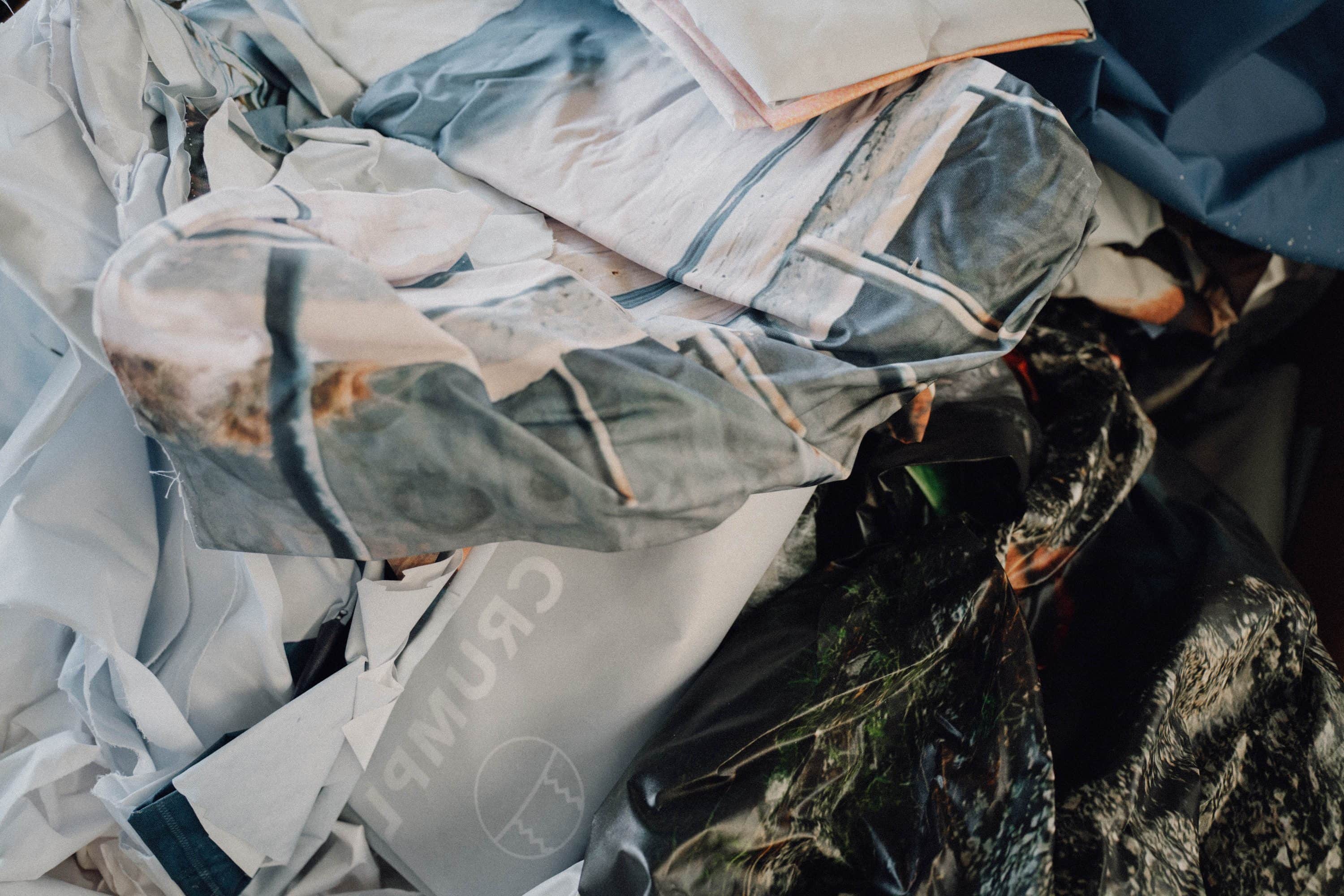
What distinguishes take-back, recycling, and circular economy
The invisible part of the material cycle: What distinguishes take-back, recycling, and circular economy
Most companies know how their advertising textiles are produced. However, what happens to them once they disappear from the sales floor or shop window often remains a blind spot in the value chain.
From that moment on, companies make decisions that go far beyond mere disposal. They determine whether a material ultimately becomes waste or whether it can continue to circulate as a resource through further usage cycles. It is precisely at this stage that the differences between take-back, recycling, and true circularity become evident.
What legally defines a recycling company
Under Austrian waste legislation, the term “recycling company” is clearly defined. Companies that merely collect or take over waste are classified as waste collectors. Only with registration as a waste treatment operator are they permitted to sort, process, or materially recover waste.
In practice, this means that not every company that takes back or collects materials is automatically part of a recycling process. Actual processing is subject to official authorization.
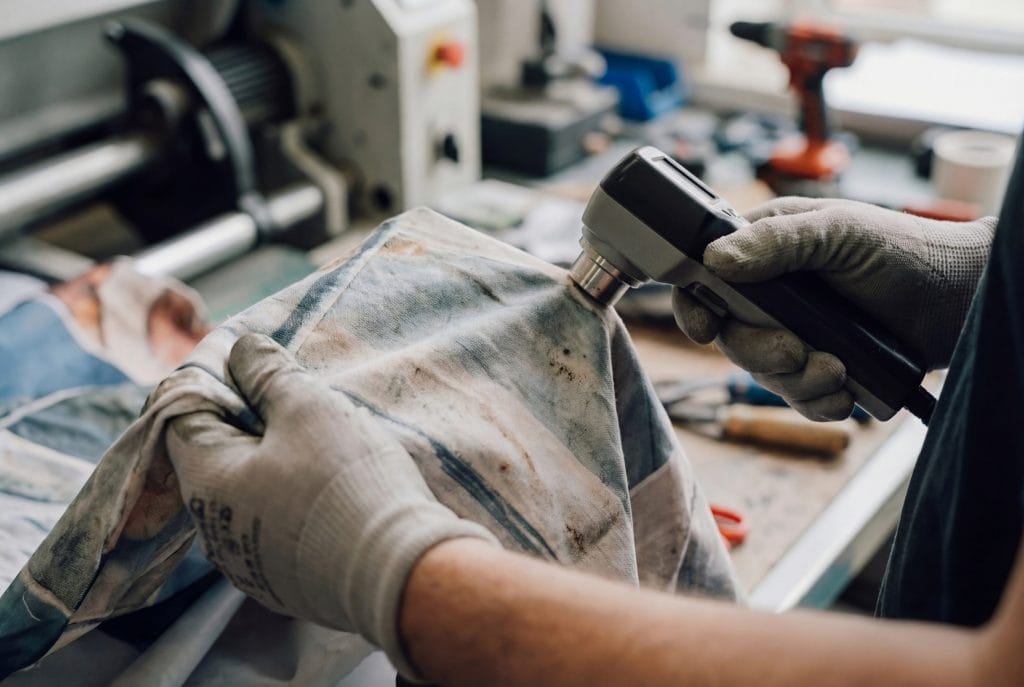
In the printing industry, this combination is rarely found: TREVISION is registered both as a waste collector and as a waste treatment operator, enabling the company to cover all process steps in-house — from take-back to material recovery. This structure is not common in the industry but is essential to ensure that the entire process is legally compliant and technically traceable.
Why registration in the EDM portal is essential
Austrian waste legislation is built on transparency: all organizations authorized to carry out material recovery are registered in the federal EDM portal. This registry clearly indicates the role a company is permitted to assume within the recovery process.
This leads to a clear conclusion: the commonly used statement “we take back our prints” is not an indication of recycling. While companies are allowed to take back products, they must subsequently transfer them to registered collectors or treatment operators. In many cases, this results in thermal recovery. For a robust circular economy concept, take-back alone is therefore not sufficient. It neither ensures a closed material loop nor delivers meaningful CO₂ benefits.

How circular economy differs from recycling
Recycling describes a single stage of material recovery. Circular economy goes further: its objective is to keep materials in circulation for as long as possible and enable multiple usage cycles. This requires control over the entire material flow — from the original advertising textile to the product made from recycled material, which is then returned into the cycle.
TREVISION implements this model for printed advertising textiles through ONE TWO MORROW©. After use, materials are taken back, recycled in-house, and processed into high-quality regranulate. This is then supplied to partner companies that manufacture new products — designed to be highly recyclable and fully circular. In this way, the material remains in the loop across multiple cycles and can replace virgin materials with a significantly higher carbon footprint.
Why this differentiation matters for companies
Companies are increasingly under pressure to provide verifiable sustainability claims. Whether in ESG reporting, funding applications, supply chain requirements, or brand communication: unclear or misused terminology undermines credibility and makes informed decision-making more difficult. With the new EmpCo Directive (EU 2024/82), which will come into force in Austria from September 2026, such vague or misleading claims will also be classified as greenwashing and may result in significant penalties.
Against this backdrop, it becomes clear why precise terminology is essential: it provides orientation in a complex environment and makes it visible which measures are truly effective.
Clarity about who is authorized to recycle and which processes enable a closed material loop is therefore not just a technical detail, but a key element of responsible brand management.
If you want to actively leverage circular economy concepts for your business and set new standards with a truly closed-loop system like ONE TWO MORROW®, get in touch directly with our Sustainability Manager Martin Bischof – m.bischof@trevision.at