
BLOG
Sustainability

What really happens when advertising textiles are “recycled”

10. March 2026

“Recycling” sounds like a simple solution to a complex problem. But when it comes to what this actually means in the context of advertising textiles, things quickly become unclear. Depending on who you ask, the answers range from simple incineration and chemical decomposition to various upcycling projects.

For companies in retail and brand communication, this creates a real dilemma: without clearly defined terms, it is impossible to make reliable and sustainable decisions. And the question of which processes actually stand behind these buzzwords – and what impact they have on CO₂ balance, material cycles and costs – often remains unanswered.

The classic route: disposal

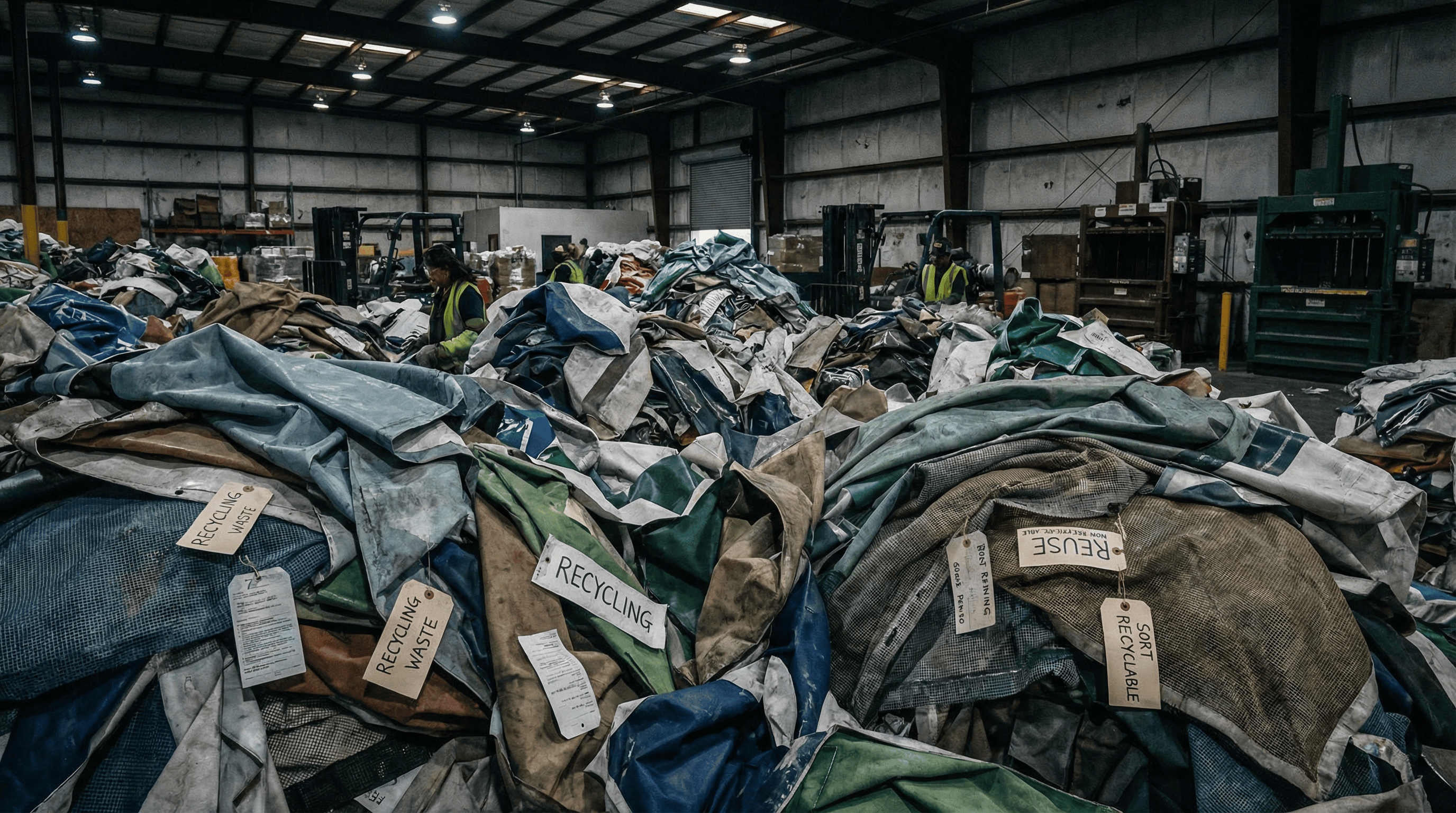
In many cases, the life cycle of advertising textiles ends relatively quickly once a campaign is over. Materials are collected and handed over to external waste management companies.

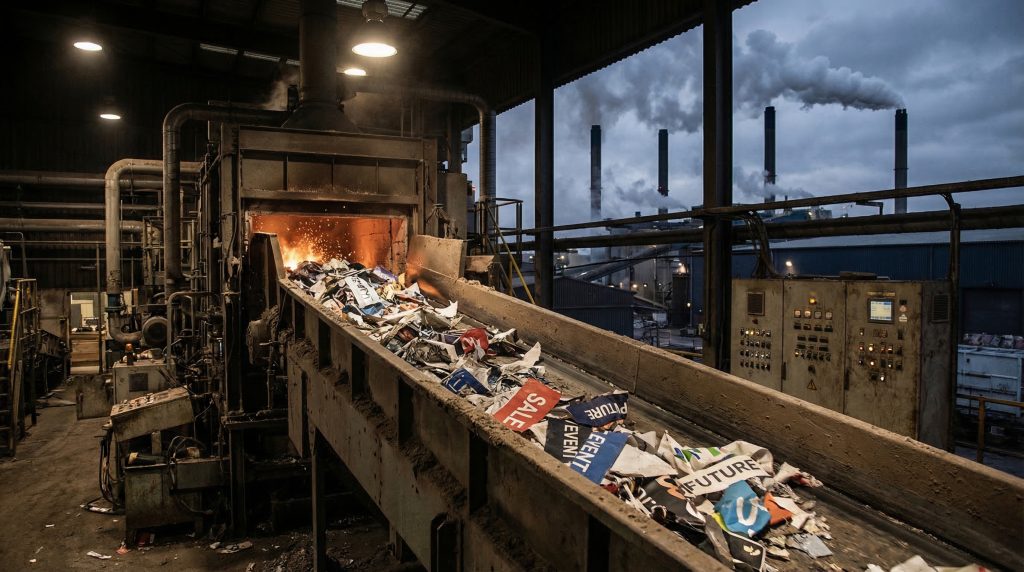
A large proportion of these materials is then thermally recovered – in other words, incinerated. From an ecological perspective, this is the least favorable option, as the energy stored in the material is lost while additional CO₂ emissions are generated.

Thermal recovery of advertising textiles – ecologically highly unfavorable

Chemical recycling: a complex pathway with many challenges

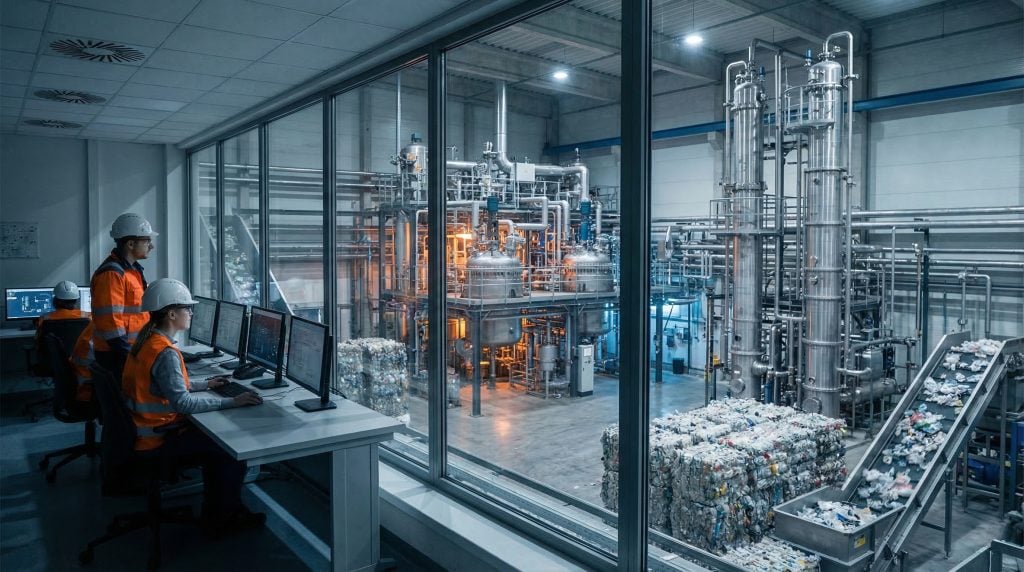
Another approach is so-called chemical recycling. In this process, plastics are broken down into their chemical base components in industrial facilities, for example through processes such as pyrolysis. In principle, these processes can work, but they are technically very complex and only possible in a limited number of large industrial plants.

In a first step, intermediate products such as pyrolysis oil or carbon residues are created. These then have to undergo additional industrial processing steps before they can be turned into new plastics again. The resulting materials usually come at four to five times the market price, making them hardly a viable economic alternative.

The process becomes particularly problematic when PVC-containing materials come into play, as is often the case in outdoor advertising. Due to chlorine compounds released during decomposition, corrosion occurs within the facilities, which means that such materials can practically not be chemically recycled.

There is also another aspect that is rarely addressed openly in practice: continuous traceability from the original material to the newly produced polymer is hardly possible in chemical recycling. For companies that require reliable data for CO₂ balances or ESG reports, this represents a structural challenge, as without transparency no genuine circular process can be demonstrated.

Chemical recycling is highly problematic and faces many challenges

Re-use: new products from existing materials

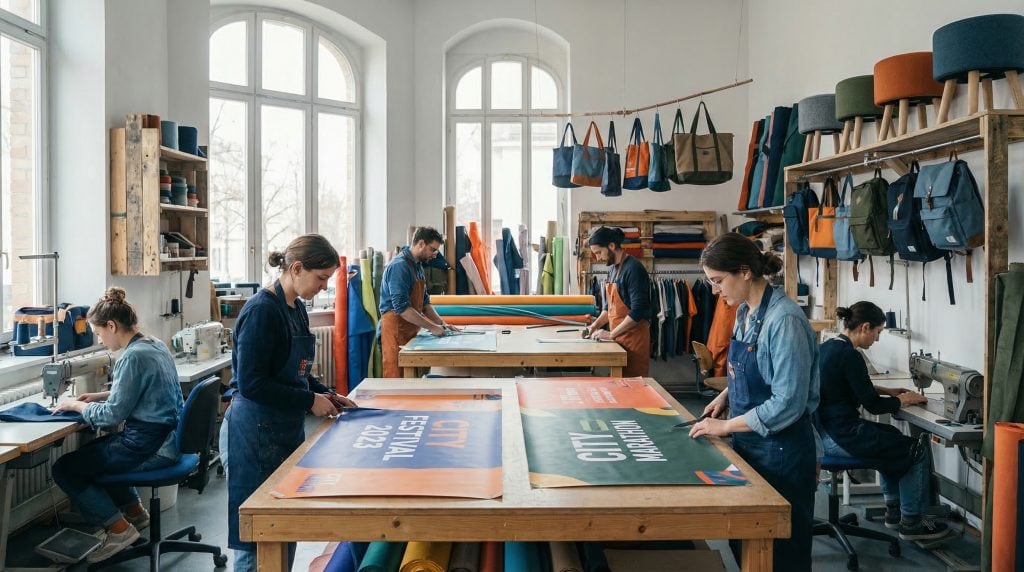
Another strategy is the direct reuse of advertising textiles in the form of new products – such as bags, furniture or accessories.

Such projects can certainly make sense and contribute to extending the life cycle of materials. At the same time, they depend heavily on whether a stable market can be found for the resulting products.

If demand is lacking or prices come under strong pressure, this approach can quickly reach its economic limits as well.

Re-use of advertising textiles can quickly reach economic limits

Material recycling as a controlled cycle

Against this backdrop, TREVISION has developed its own recycling approach, focusing more strongly on industrial feasibility and traceable material cycles.

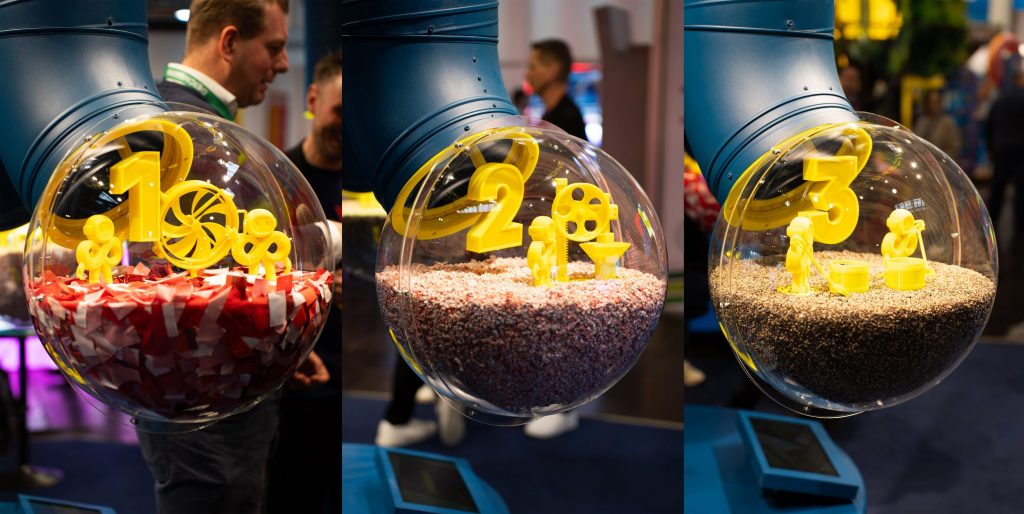
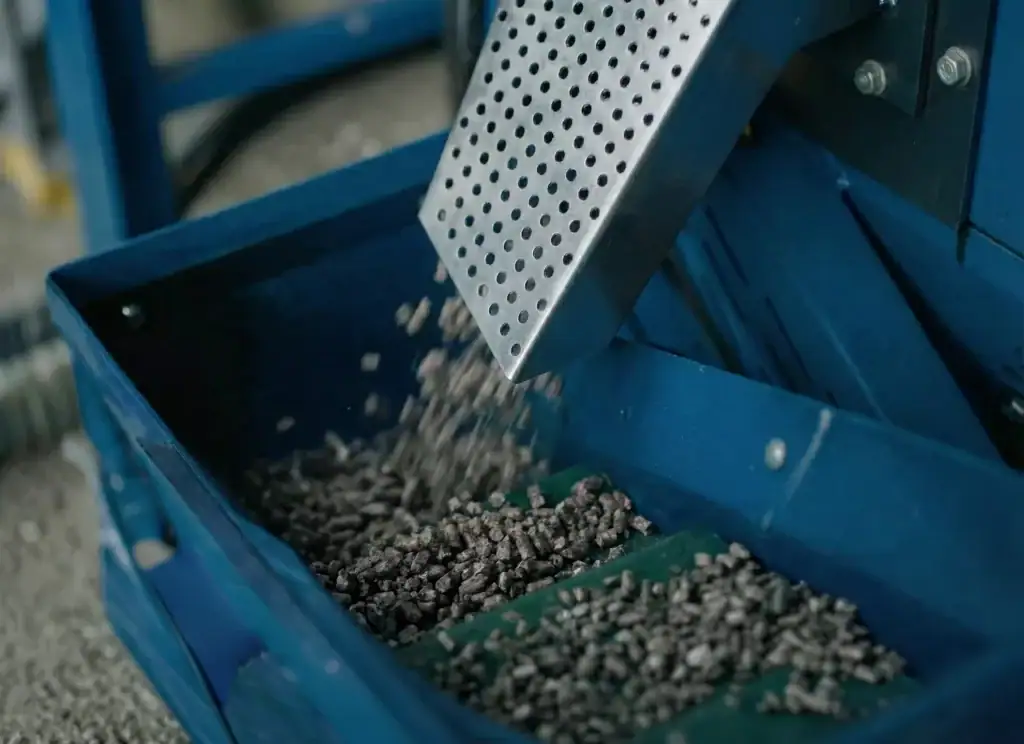
With ONE TWO MORROW®, a recycling process for PET-based advertising textiles was established in-house. At its core, it is a closed system: materials from the company’s own production are taken back after use, sorted, technically processed, and fed back into the material cycle – without chemical processes and with full documentation.

Illustrated as a perspective: the 3 steps of ONE TWO MORROW®
YouTube

Mit dem Laden des Videos akzeptieren Sie die Datenschutzerklärung von YouTube.
Mehr erfahren
Video laden

Another important aspect: as a registered recycling company, TREVISION has the necessary legal framework in place to take back and process materials from international campaigns as well.

Closed in-house material cycle at TREVISION

Transparency and scientific support

A key component of the system is the transparent documentation of all material flows. Through a digital platform, participating companies can track which materials are collected, processed and reintroduced into the system.

The analysis of this data – including the resulting CO₂ savings – is carried out in collaboration with Johannes Kepler University Linz. This scientific support ensures that the results are transparent, verifiable and suitable for use in sustainability reporting. Companies therefore receive reliable data that can be used in their sustainability reports.

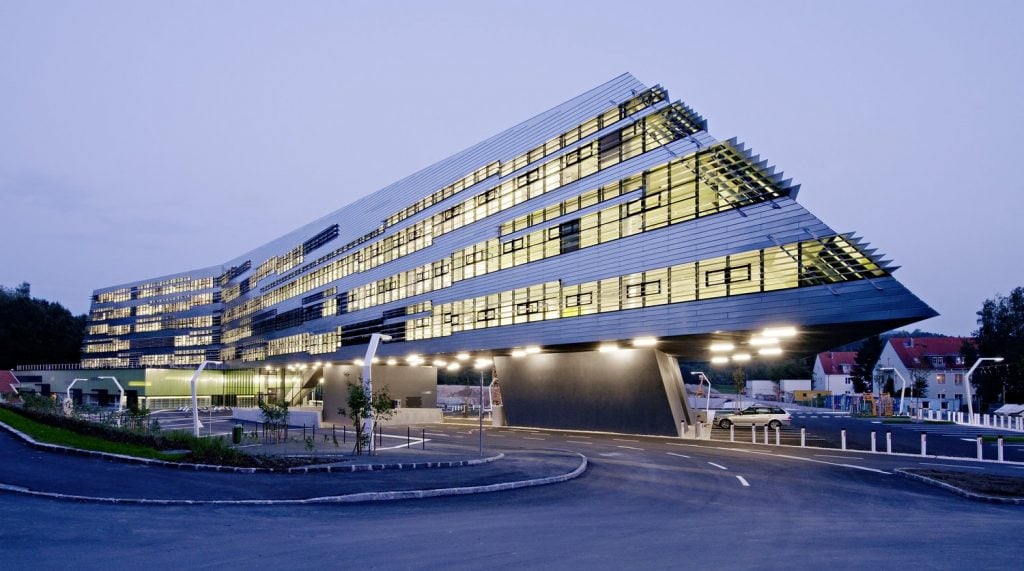
Transparency and long-term scientific support by JKU Linz

In the future, this approach can also be implemented at additional locations or together with partner companies in order to establish regional circular solutions.

For TREVISION, recycling is not an isolated process, but part of a broader responsibility that is considered along the entire value chain.